Words matter.  We know that intuitively, but now there is a study to remind us as lawyers to choose our verbs carefully. 

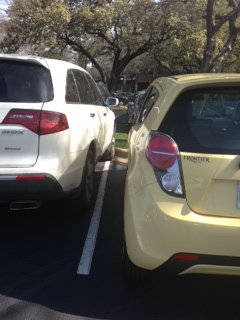
A group of subjects watched videos of car accidents, and researchers asked them to estimate how fast the cars were traveling. Some viewers were asked how fast the cars were going when they "hit" one another, while others were asked how fast cars were going when they "smashed, collided, bumped or contacted" each other.

The results? Subjects estimated that the cars that smashed into one another were traveling at 40.6 miles per hour, those that collided at 39.3 mph, the ones that bumped at 38.1 mph, those in the hit category at a mere 34.0 mph, and those that had contact at only 31.8 mph.

But, wait, it gets worse. Some of the verbs even created a false memory. The researchers waited a week, then they asked the subjects to recall whether they had seen any broken glass after the accident. Almost all the subjects who got the “hit” language in the question recalled no broken glass. But almost 33 percent of those told the cars had “smashed” recalled seeing broken glass. 

Credit: Michael Maslanka at http://texaslawyer.typepad.com/work_matters/


Congratulations to Chad Dunn who was recognized this month in Texas Lawyer Magazine as one of the top 25 lawyers under the age of 40 in Texas.  


To see the publication, follow the link:  http://at.law.com/Texasleaders
 
 
The U.S. Department of Transportation's National Highway Traffic Safety Administration (NHTSA) has a new app for iPhones and iPods that will provide real-time vehicle safety information to consumers from NHTSA's SaferCar.gov site. NHTSA's SaferCar app allows users to search its 5-Star Safety Ratings for vehicles by make and model, locate car seat installation help, file a vehicle safety complaint, find recall information and subscribe to automatic notices about vehicle recalls.
 
 
Picture
 Fleet vehicles are white and school buses are yellow, but what color car is scientifically proven to be the safest?

We still don't know the answer.

A Swedish study found that pink cars are involved in the fewest crashes and black cars are involved in the most, but a study from New Zealand found that there was a significantly lower rate of serious injury in silver cars; with higher rates in, brown, black, and green cars.  

Scientists have analyzed risk by light condition. It found that in daylight, black cars were 12% more likely than white to be involved in an accident, followed by grey cars at 11%, silver cars at 10%, and red and blue cars at 7%, with no other colors found to be significantly more or less risky than white. 

At dawn or dusk the risk ratio for black cars jumped to 47% more likely than white, and that for silver cars to 15%. In the hours of darkness only red and silver cars were found to be significantly more risky than white, by 10% and 8% respectively. 

However, no study on the relation between car color and safety is scientifically conclusive.

Source: AAA Foundation


The National Highway Traffic Safety Administration (NHTSA) has been very busy lately.   This federal agency, which has as its mission “to save lives, prevent injuries and reduce traffic-related health care and other economic costs”, has proposed two important rules:

1)    Backup cameras in new cars, pickups and vans, and

2)    Event Data Recorders in all light passenger vehicles

Backup Cameras

NHTSA estimates that, on average, 292 fatalities and 18,000 injuries occur each year as a result of back-over crashes involving all vehicles. Two particularly vulnerable populations – children and the elderly -– are affected most.  NHTSA believes that back-up cameras, which activate when putting the vehicle into reverse, would save lives.

Event Data Recorders

NHTSA is proposing that automakers install event data recorders (EDRs) in all light passenger vehicles beginning September 1, 2014.   These “black boxes” would capture valuable safety-related data in the seconds before and during a motor vehicle crash.

A crash or air bag deployment typically triggers the EDR, which collects data in the seconds before and during a crash. The data collected by EDRs can be used to improve highway safety by ensuring NHTSA, other crash investigators and automotive manufacturers understand the dynamics involved in a crash and the performance of safety systems.

Examples of some of the information recorded include:

  • vehicle speed

  • whether the brake was activated in the moments before a crash;

  • crash forces at the moment of impact;

  • information about the state of the engine throttle;

  • air bag deployment timing and air bag readiness prior to the crash; and

  • whether the vehicle occupant's seat belt was buckled.

EDRs do not collect any personal identifying information or record conversations and do not run continuously.

Idea for the future

While not being proposed at this time, the next logical step would be forward facing DVR (video recorders) in the mirror that would record the view of the road ahead during the 20 seconds before a collision.  This video, already a presence in many police cars, would answer questions about how and why a collision occurred.


Each year, a countless number of drivers and passengers in motor vehicle accidents survive due to the deployment of the automobile airbag. According to a number of independent and government studies, automobile airbags have decreased fatalities by about 21 percent for unbelted drivers and by at least 9 percent for drivers wearing seatbelts.
 
The downside of airbag deployment is the introduction of a new spectrum of
injuries. Most are minor, but some can be life threatening. These injuries
include eye damage and trauma to the spine, facial nerves and facial bones.

Of particular interest to me are hearing and balance disturbances.

Clients who are in wrecks where the airbag explodes complain to me of hearing loss and/or ringing in their ears, a condition that physicians call tinnitus.  

New vehicles are now equipped with side and other airbags, sometimes totalling up to 10 airbags.  With airbags exploding at about 170 dB, a car wreck suddenly becomes a very noisy environment with high potential for hearing loss and/or tinnitus.

I hope that physicians treating victims of motor vehicle accidents will take ear injuries into consideration when documenting patient injuries and offering emergency care.


When shopping for a car, it would be helpful to know the relative cost of insurance of one model compared to another.  While it is intuitive that expensive cars will cost more to insure than inexpensive cars, insurance company statistics reveal that the inexpensive car may have a much higher reported rate of injuries.  That will result in higher premiums than an expensive car.

Here's a link to help you make those comparisons before your purchase.
 
 
Statistics from last year indicated that traffic deaths had fallen to the lowest level since 1949. 

Now, a report by the National Highway Traffic Safety Administration  compares the first half of 2012 with the first half of 2011 and projects a 9 percent increase (PDF).  Officials at NHTSA called this the largest such increase during the first half of the year since the agency began collecting the crash data in 1975. 

Why are traffic deaths trending upward?

This may be a statistical anomaly. With a mild winter in many parts of the country, people drove more. In addition, the recovering economy probably contributed to people driving more than before, and with more miles comes more wrecks.

No one knows when we will return to trending lower, but it seems inevitable. We now have safer vehicle and roads.  It is likely that we will again see the rate of traffic deaths fall over time. 
 
 
Distracted driving is a contributing factor in nearly 10% of all fatal crashes in 2010, while that number nearly doubles to 18% for crashes where individuals were injured, according to a report by the National Highway Traffic Safety Administration.

The report studied all vehicle crashes in 2010.  NHTSA found that 416,000 people were injured that year in motor vehicle crashes that involved distracted drivers, while 3,092 peoople were killed in crashes where someone was exhibiting distracted driving behaviors.

Of the large truck drivers (like 18-wheelers) involved in fatal crashes, 5% were found to have been distracted, and 9% of those were distracted by their cell phones.  It is noteworthy that handheld use of cell phones is prohibited for truck drivers operating on interstate highways.

In comparison, 7% of the passenger car drivers in fatal crashes were found to have been distracted, and 14% of those were distracted by cell phones.

Cell phone usage was associated with 408 deaths (13% of total distracted driving fatalities) and 24,000 injuries (6% of those injured in distracted driving crashes).

Young people are more distracted than others.  Of drivers less than 20 years old involved in a fatal crash, 11% were found to be distracted at the time of the crash making this age group the largest of all distracted drivers involved in a fatal crash. About 19% of this group was distracted by cell phones.

You will find more Distracted Driving information on distraction.gov.   
 
 
Picture
In January of 2012, BMW recalled almost 89,000 Mini Coopers from model years 2007 to 2011.  The reason?  A faulty water pump circuit board could smolder and cause a vehicle fire.  BMW said that there had been 4 incidents of burned engine compartments as of November 2011 and that replacement of water pumps would begin in February.

There have now been 5 fires. 

A friend was at a restaurant in Fulshear, Texas, this weekend when a Mini Cooper in the parking lot went up in flames.

I apologize for the photo, but he was afraid to get any closer.  The car was total loss.  On YouTube, there is a video of a different Mini Cooper fire.

If you have a 2007 to 2011 Mini Cooper and are not sure whether your vehicle has been recalled, contact BMW at 1-866-275-6464.